
Why Some Children and Adults Struggle to Learn to Swim
Learning to swim should be one of childhood’s great milestones. For many families in Adelaide, though, swimming lessons become a recurring source of distress, for the child who refuses to put their face in the water, the child who panics the moment their feet leave the ground, and the parents watching helplessly from the pool deck, wondering what they are doing wrong.
If this sounds familiar, here is something important: your child is not being difficult. They are not a “drama queen.” They are not lazy, uncoordinated, or fearful for no reason.
There is very often something deeper going on, something neurological, that no amount of patient poolside encouragement will fix on its own. And once you understand what it is, the behaviour at the pool starts to make complete sense.
It comes down to something called primitive reflexes.
Does this sound like your child or someone you know? At TDT, we work with children and adults across Adelaide to address the neurological foundations behind challenges like these. Our free 30-minute phone consultation is the right first step. Book your complimentary call — available Mondays 3:30–4:30pm.
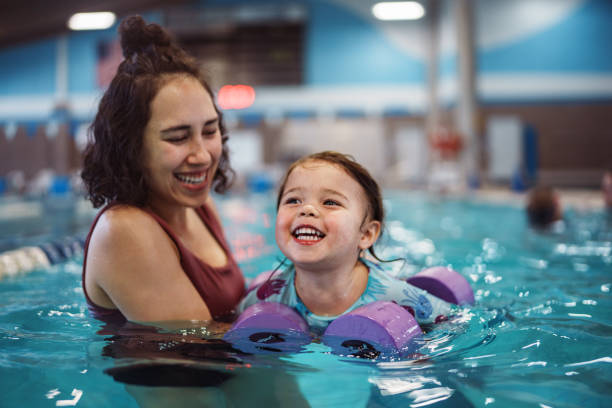
An adorable multiracial three year old girl wearing flotation devices on her arms smiles as her mother helps her swim during a lesson at an indoor aquatic park.
What Are Primitive Reflexes: And Why Do They Matter for Swimming?
When a baby is born, they arrive with a set of automatic, involuntary movement patterns built into their nervous system. These are called primitive reflexes, and in early infancy they are completely normal and essential. They help a baby survive, turning toward touch, gripping tightly, responding to sudden movement or sound.
As the brain matures, these reflexes are supposed to integrate. That means the higher centres of the brain take over, and the automatic survival-driven movements fade into the background, absorbed into more sophisticated, voluntary movement patterns.
But sometimes, this does not happen as it should.
When primitive reflexes remain active beyond their typical developmental window, we call these retained primitive reflexes, they can interfere with movement, coordination, sensory processing, and emotional regulation in ways that persist well into childhood and adulthood. The effects show up across many areas of life, from reading and writing to behaviour in the classroom. You can read more about this in our post on how the nervous system underpins learning and behaviour.
The swimming pool, it turns out, is one of the most triggering environments imaginable for someone with retained reflexes. Here is why.
What We Are Actually Asking a Child to Do When We Ask Them to Swim
Stop and think for a moment about what swimming actually requires. We are asking a person to:
- Voluntarily submerge their face and hold their breath
- Keep their legs up and horizontal when every instinct is telling them to drop down and find the ground
- Coordinate arms and legs in alternating, rhythmic patterns simultaneously
- Turn their head to one side to breathe without losing that coordination
- Block out the sensation of water in their ears, on their face, and up their nose
- Manage all of this in a loud, echoey, unpredictable sensory environment
For a nervous system that is already working overtime to manage retained reflexes, this is not just hard. It can feel genuinely unsafe. And that sense of unsafety is not imagined or exaggerated — it is a real physiological response, generated by a nervous system doing exactly what it is designed to do.
This is not a confidence problem. It is not a willpower problem. It is a nervous system problem.
The Specific Reflexes Behind Swimming Difficulties
Several primitive reflexes are particularly relevant when it comes to learning to swim. Understanding each one helps explain why certain children struggle in specific, predictable ways, and why those struggles persist no matter how patient or skilled the instructor is.
The Moro Reflex: The Startle Response
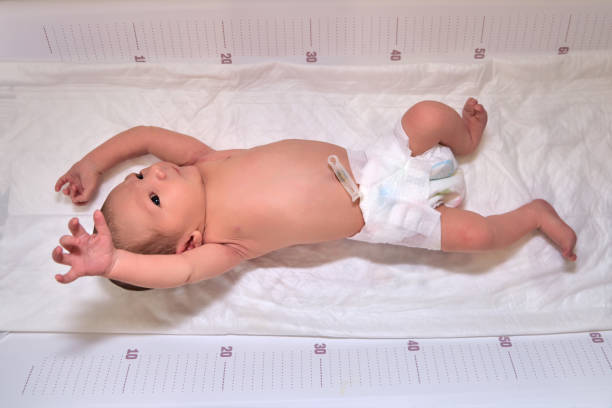
A newborn baby in diapers on a white changing table with a ruler with a Moro reflex
The Moro reflex is one of the most significant. When a baby feels suddenly unsupported or hears a loud sound, they throw their arms wide, gasp, and cry. In infancy, this is completely appropriate, it is a survival response.
When the Moro reflex is retained beyond the developmental window, the person lives in a near-constant state of low-level alarm. The nervous system is primed to detect threat. Water touching the face, the sensation of floating, the loss of solid ground beneath the feet, all of these can trigger a Moro response. The body reads the situation as danger and floods with cortisol and adrenaline. Learning shuts down entirely. Getting their face in the water is not going to happen, regardless of how gentle or encouraging the instructor is.
You might recognise this as: the child who screams at the thought of getting their hair wet — not just in swimming lessons, but at bathtime too. The child who is startled easily and takes a long time to settle. The adult who freezes completely when their feet cannot touch the bottom of the pool.
The Moro reflex is closely connected to anxiety and demand avoidance more broadly. When this reflex is retained, many everyday situations can feel threatening to the nervous system, not just the pool. If your child has a generally high anxiety response to unpredictable environments, swimming difficulties may be one part of a larger picture worth exploring.
The Tonic Labyrinthine Reflex (TLR): Head Position and Body Tone
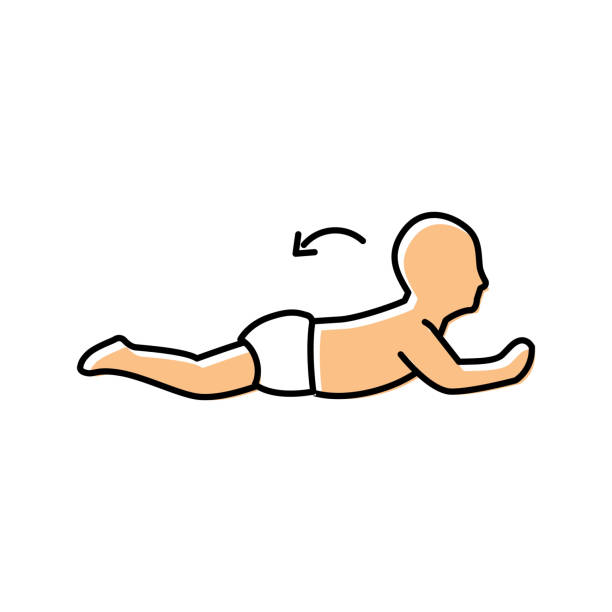
tonic labyrinthine reflex color icon vector. tonic labyrinthine reflex sign. isolated symbol illustration
The Tonic Labyrinthine Reflex influences muscle tone in response to the position of the head. In a mature nervous system, tilting the head forward or backward should not significantly affect the rest of the body. When the TLR is retained, however, head position triggers a whole-body response.
Tilting the head to look down, as you would when swimming breaststroke or freestyle, triggers the legs to drop, the hips to sink, and the body to fold forward. The child is not kicking incorrectly through lack of effort or poor technique. Their nervous system is responding to where their head is pointing. The body is doing exactly what the retained TLR is telling it to do.
You might recognise this as: the child who kicks and kicks but whose legs keep sinking, no matter how many times the technique is demonstrated. The child whose body seems to work against them in the water.
The Symmetrical Tonic Neck Reflex (STNR): Arms and Legs Working Against Each Other
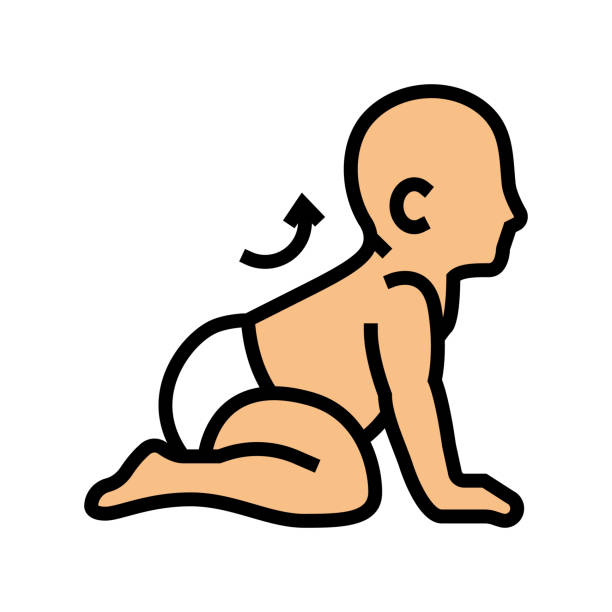
symmetrical tonic neck reflex color icon vector. symmetrical tonic neck reflex sign. isolated symbol illustration
The STNR is closely related to the TLR. When the head moves upward, it creates a pull for the arms to straighten and the legs to bend. When the head moves downward, the arms want to bend and the legs want to straighten. In a well-integrated nervous system, the arms and legs can work independently of head position.
In swimming, where smooth coordination requires the arms and legs to work somewhat independently of where the head is pointing, a retained STNR makes that coordination feel almost impossible, because for that nervous system, it genuinely is. The brain is receiving conflicting instructions from the reflex and from the conscious attempt to swim, and the reflex almost always wins.
You might recognise this as: the person who can demonstrate the arm stroke standing on dry land, can kick while holding the wall, but the moment they try to put it all together in the water, it completely falls apart.
The Spinal Galant Reflex: Constant Distraction at the Hips
The Spinal Galant reflex runs along the lower back. Touch or movement along the spine triggers an involuntary hip rotation. In infancy, this reflex assists with the birthing process and with early crawling movements.
When retained, the sensation of water moving around the lower back and hips can trigger this reflex almost continuously in the pool, making it very difficult to keep the body streamlined and still. The hips keep rotating involuntarily. Maintaining a flat, efficient body position in the water becomes a constant battle against the child’s own nervous system.
You might recognise this child away from the pool too: they are often very ticklish along their sides, cannot tolerate tight waistbands, and wriggle constantly when seated. The pool simply amplifies a reflex that is present everywhere.
Putting It All Together: What This Looks Like at the Pool
Now that we understand the individual reflexes, some very common poolside pictures start to make neurological sense.
The child who has attended swimming lessons for three years and is still not swimming independently is not failing to try hard enough, they are likely working against one or more retained reflexes that no amount of technique coaching will override.
The adult who can manage in the shallow end but freezes when their feet cannot touch the bottom is not being irrational, the loss of ground contact is activating a genuine physiological threat response through the Moro reflex.
The child who panics every single lesson at the moment their face enters the water, year after year, is not choosing that response, their nervous system is generating it automatically and below conscious control.
The person who can do every component of a stroke separately but cannot put them together in the water is not uncoordinated, their STNR is creating a genuine conflict between head position and limb movement that conscious effort cannot fully override.
These patterns often appear in other areas of life too, in the classroom, at mealtimes, during transitions, or in response to sensory input. If swimming is one of several areas where your child is struggling, the post on the bottom-up approach to learning and behaviour explains how these foundational nervous system issues connect to a much wider range of developmental challenges.
What Can Actually Help
The genuinely good news is that primitive reflexes can be integrated, even in older children and adults. This is not a permanent neurological ceiling. It is an area where targeted therapeutic work can produce real, lasting change.
Reflex integration therapy uses specific, repetitive, rhythmic movement sequences, often deceptively simple-looking exercises, to help the brain and body work through the developmental stages that were missed and gradually reduce the interference these reflexes cause. The exercises do not look impressive. But the changes they produce, with consistency over time, can be significant.
At Tailored Developmental Therapies, Emily works directly with children and adults on reflex integration as part of individualised neuroplasticity programs. These programs are not one-size-fits-all, they are built around each person’s specific retained reflex profile, identified through our comprehensive assessment process.
Families consistently tell us that once retained reflexes begin to integrate, progress in swimming, and in many other areas of daily life, often follows. Not because we taught them to swim, but because we addressed the neurological interference that was making swimming impossible.
You can read more about how our programs are structured and what the broader therapeutic process looks like in our posts on the Taylor & Trott Pyramid of Learning and what positive changes look like as therapy progresses.
The Sensory Environment of the Pool
It is also worth acknowledging that the swimming pool is one of the most challenging sensory environments a child can encounter. Echoing acoustics, unpredictable splashing, cold water, strong smells, the sensation of water in ears and on the face, the visual distortion of looking through water, for a child whose sensory processing is already under strain from retained reflexes, all of this compounds the challenge significantly.
This is why simply encouraging a child to “be brave” or “just try” rarely produces sustained progress. The nervous system needs to feel safe before it can engage with learning. Creating that sense of safety is not primarily a matter of emotional reassurance, it is a neurological process. And it is one that starts well before the child reaches the pool.
If your child also shows sensory sensitivities in other areas, food textures, clothing, loud environments, you may find our posts on thumb sucking, fussy eating, and the sensory connection and heavy work activities that support nervous system regulation useful reading alongside this one.
Frequently Asked Questions
My child has had years of swimming lessons and still cannot swim. Is it too late to address retained reflexes?
It is not too late. Reflex integration is possible at any age, we work with children, teenagers, and adults. The process may take longer in older individuals because the nervous system has had more time to build compensatory patterns around the retained reflexes, but meaningful progress is absolutely achievable. The first step is assessment, which is something we can discuss during a complimentary phone consultation.
Could this explain other difficulties my child has, not just swimming?
Very likely, yes. Retained primitive reflexes affect the whole nervous system, which means their effects show up across many areas of life, not just at the pool. Learning difficulties, poor coordination, emotional dysregulation, demand avoidance, sensory sensitivities, and behaviour challenges are all commonly associated with retained reflex patterns. Our assessment process looks at the full picture rather than addressing one area in isolation.
What does reflex integration therapy actually look like?
Reflex integration programs typically involve short, daily movement sequences at home, supported by regular sessions with Emily at our Mawson Lakes clinic, via Zoom, or in your home. The exercises themselves are gentle and repetitive, they are designed to give the nervous system the patterned input it needs to complete the developmental stages it missed. Programs are built individually based on assessment findings and adjusted regularly as the client progresses.
Can this be funded through NDIS?
Yes. TDT works with NDIS participants. Our services may be accessible under relevant NDIS support categories for plan-managed and self-managed participants. We are happy to discuss how your plan can support a reflex integration program during your complimentary phone consultation.
My child does not have a diagnosis. Can you still help?
Yes. A formal diagnosis is not required to access TDT’s programs. Retained primitive reflexes are a developmental issue, not a diagnostic category and their effects are real regardless of whether a child has a label attached to them. Our assessment process looks at what is actually happening in the nervous system, not at diagnostic paperwork.
Is swimming one piece of a bigger picture for your child?
Book your free 30-minute phone consultation with the TDT team.
We assess the full neurological picture and build a program that addresses root causes.


